
Loading index – indicating how much weight a tyre can carry.
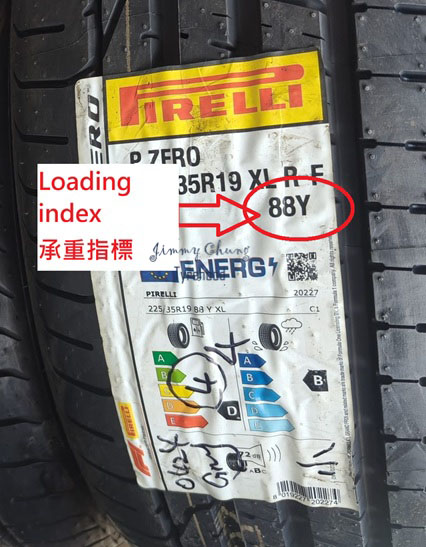
Loading index is shown after the tyre size.
In this case, 255/35 R19 88Y, the loading index will be 88.
Passenger vehicle, regardless of SUV or electric vehicle, normally does not concern about tyre loading as the original equipped sizes standard loading range have more than enough loading index to support all sorts of vehicles.
Even if you have modified the tyre size, the modified tyre loading index still have plentiful to support the vehicle weight. Sometimes even higher than the original equipped. Unless you have installed a lower size than the original equipped size (which I believe it shouldn’t be happening).
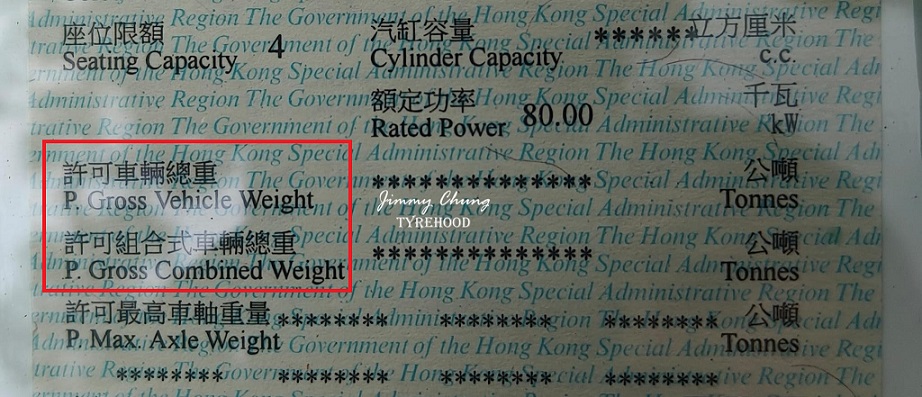
Possibly because passenger tyre loading index is not a concern for passenger vehicle, the Hong Kong driving permit does not show any values for the weight of the vehicle.
But loading index problem isn’t on passenger vehicle. The concern is related to light goods vehicle.
The issue with Light Goods Vehicle tyres
Getting passenger tyres for light goods vehicle
Comparing passenger car tyre to commercial vehicle tyre, passenger car tyre offer much better performance in terms of every aspect like traction, wet grip, and control. Although wear off is much higher than commercial vehicle tyre, some drivers prefer getting the passenger car tyre.
That is totally fine, if the tyre loading index is enough to support the vehicle maximum weight.
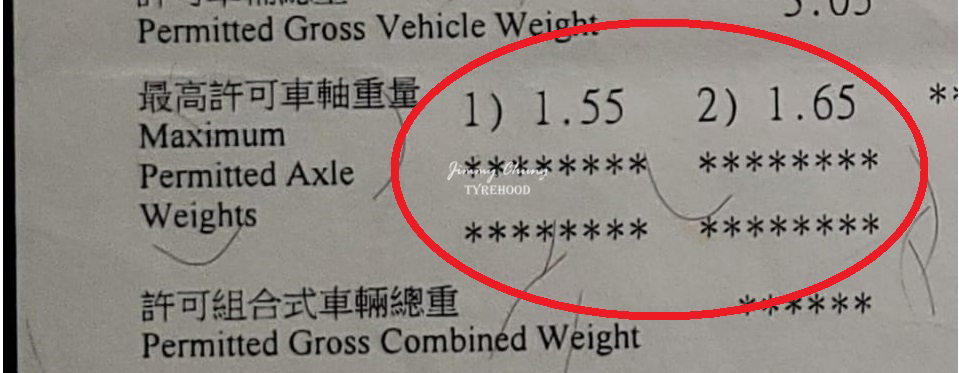
As long as the loading index combined meet the above maximum permitted for the corresponding front and rear axle weights, you are good to go.
However, some light goods vehicle drivers are not aware of the problem of getting insufficient loading index for their vehicles. The case below happens in HK. You can use it as a reference to your home country to get corresponding loading index tyre.
Insufficient passenger tyre loading index for light goods vehicle
Recently, I met a Peugeot Traveller driver who got a passenger rear tyre on the rear. Its tyre actually reached the end of its service life. The inner side of the tyre metal lining appeared, waiting to get burst. I told him about the tyre loading index did not meet the minimum requirement of the van but I was ignored.

Peugeot Traveler Legal Maximum Weight.
The rear axle maximum weight is 1.8 tonnes.
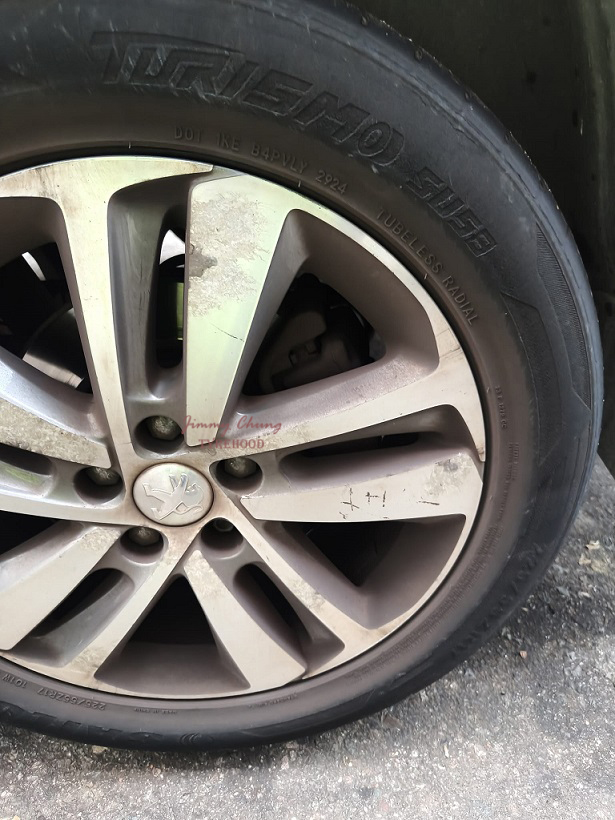
225/55 ZR17 Sailun SU58, loading index is 101
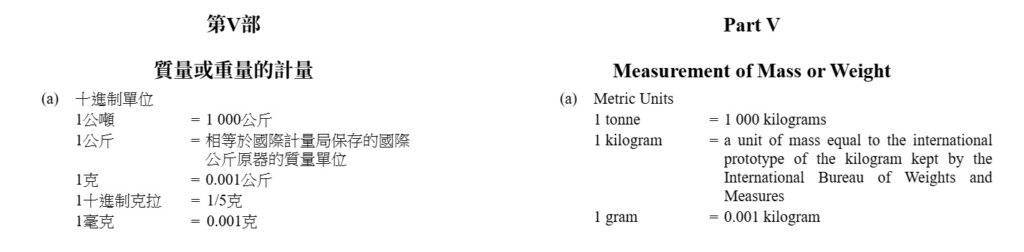
According to Cap 68, Weights and Measures Ordinance, 1 tonne = 1000 kg.
1.8 tonnes = 1800kg. Loading index of 101 can carry 825kg.
Light Goods Vehicle rear axle has two tyres, hence, the existing Sailun SU58 on the rear can only support 825 x 2 = 1650kg. Far below the maximum weight as shown on the vehicle driving permit.
(Short Ton) 1 tonne = 907.185kg, applies in the U.S.
(Long Ton) 1 tonne = 1016.05 kg, applies in the U.K.
More measurement conversion can be found in Cap 68 to meet the HK legal requirement.
If you want to calculate your own minimum loading index, you can click the website here for assistance. All the speed index and loading index decode can also be found on the website.
Consequences of insufficient loading index for your light goods vehicle
🔧 Mechanical & Safety Risks
- Sudden tire burst (blowout), leading to serious accident
- Heat accumulates under more stress, causing rubber degradation and tread separation
- Tire wears faster
- Cracks, bulges, or ply separation at tyre sidewall
- Increasing stopping distance
🚚 Vehicle Performance & Operational Issues
- Suspension overload, causing earlier broke down. In turn causing tyres wear off much faster.
⚖️ Legal & Compliance Consequences
- Deny claims on insurance.
🛡️ Long-Term Risks
- Higher maintenance costs
Common Commercial Vehicle Loading Index Reference
| Loading Index | Weight |
| 87 | 545 kg |
| 92 | 630 kg |
| 99 | 775 kg |
| 101 | 825 kg |
| 103 | 875 kg |
| 104 | 900 kg |
To purchase automotive tire, batteries and automobile, travel and personal insurance in HK,,whatsapp Jimmy : 5113 0668
Useful calculator:
-> Tyre Speed and Loading index decode and calculation
Recommended article:
Other articles:
-> Tyre related information
-> Automotive Battery related information
-> Vehicle maintenance and DIY
-> Global Travel Guide
