
The Korea tyre label released in the year 2012 as a compulsory tyre labelling regulation. It rolled out the same year as the EU regulation. It also follows the same testing procedure as ECE R117.
The Korea tyre label follows
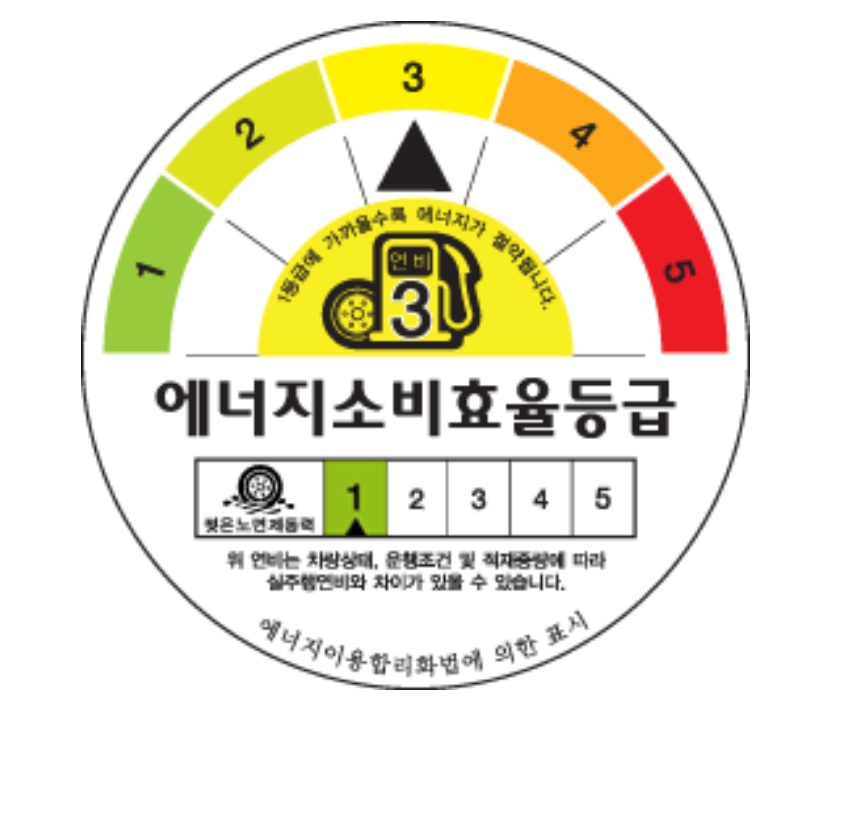
⛽icon – Fuel Efficiency
Rating shows on top of the label. This section is the same as Thai Eco Tyre label and EU Tyre label. But only 4 rating is used in fact due to Korea regulation.
Below is a table about the rough difference between each grade. Each difference can be affected by other factors such as vehicle weight, driver driving habit, road conditions and so on.
Electric consumption by Electric Vehicle will increase if Fuel Efficiency grade is down. However, it cannot be accurately bring out the result on the paper.
| Rating | Passenger car tyres (Rolling Resistance Coefficient) | Percentage increase in fuel/electric consumption |
| 1 | less than or equal 6.5 | Best in fuel saving |
| 2 | 6.6 – 7.7 | Increase around 1% compared to rate “1” |
| 3 | 7.8 – 9.0 | Increase around 1.5% compared to rate “2” |
| 4 | 9.1 – 10.5 | Increase around 2% compared to rate “3” |
| 5 | – | – |
According to Korea law regulation, tyres sold in Korea market minimum rating needs to be 4 (RRC less than or equal to 10.5). Otherwise, it is not allowed to be sold in the market.
The label also applies to light truck and commercial tyres with different data value. This topic will be discussed in another post.
🌧️Tyre on a wet road icon – Wet Grip
Rating shows at the bottom of the label. This section is also the same as Thai Eco Tyre label and EU Tyre label. And also 4 rating is used due to Korea regulation.
| Rating | Passenger car tyres (wet grip index) | percentage increase in wet braking distance |
| 1 | Greater than / equal 1.55 | Shortest braking distance |
| 2 | 1.4 – 1.54 | Increase around 5% (3-4 meter) compared to rate “1” |
| 3 | 1.25 – 1.39 | Increase around 6-7% (3-4 meter) compared to rate “2” |
| 4 | 1.1 – 1.24 | Increase around 8-9% (4-5 meter) compared to rate “3” |
| 5 | N/A | – |
According to Korea law regulation, tyres sold in Korea market minimum rating needs to be 4 (wet grip index greater than or equal to 1.1). Otherwise, it is not allowed to be sold in the market.
The label also applies to light truck and commercial tyres with different data value. This topic will be discussed in another post.
External Rolling Noise
The Korea tyre label does not have external rolling noise. However, starting from the year 2026, the government has changed the regulation to require submitting external rolling noise.
The Korea Tyre Label data shown on Tyrehood website is only in general value. Depending on the traffic of the website and demand, I can put up all corresponding related model and size for your reference.
FAQ
1. Is the testing standard the same as EU Tyre Label?
A: Yes. It all aligns with the same procedure just like Thai Eco Tyre Label as well.
2. Any specific difference on the Korea Tyre Label vs EU Tyre Label?
A: Just like the Thai Eco Tyre Label, the testing environment imitates the environment in Korea.
3. Does Korea Tyre Label data getting the same rating as EU and Thai Tyre Label?
No. All three tyre label can have the same basic testing procedure but with different environment. Result may differ.
4. Does a tyre (same size, same model) have different Korea tyre label data?
Yes. Just like the EU tyre label, the same tyre model with the same size, even with the same specification can have two different values appear on the Korea tyre label, possibly due to manufacturing places.
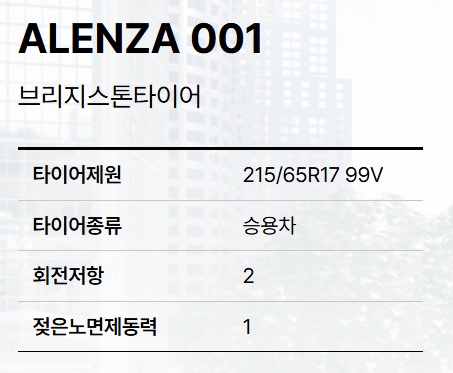
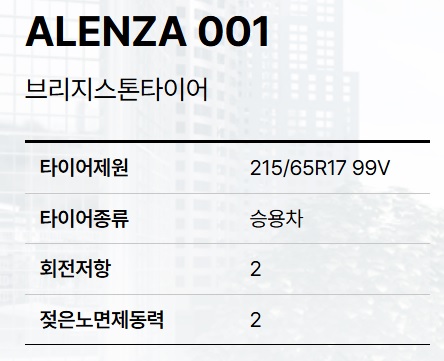
An example of this as followed: AL001, one with wet grip rank “1”, and the other rank “2”
Other related articles:
-> EU Tyre Label Explained
-> Thai Eco Tyre Label Explained
-> Learn more about Japan Tyre Label
-> UTQG Explained
Other articles:
-> Tyre related information
-> Automotive Battery related information
-> Vehicle maintenance and DIY
-> Global Travel Guide
