
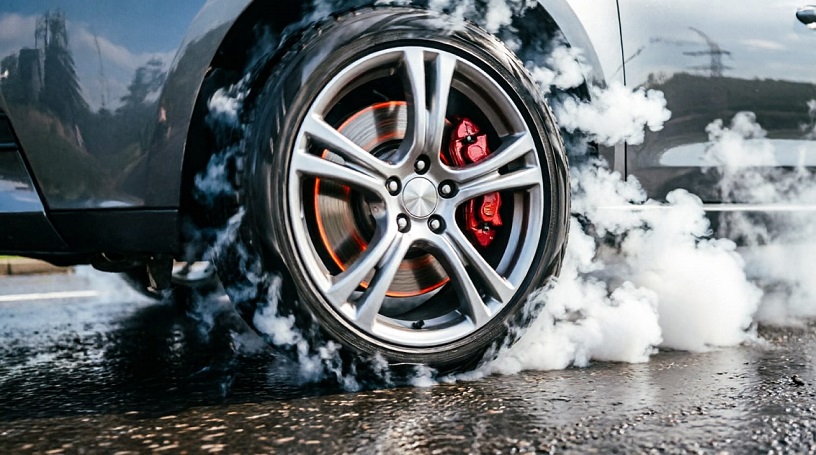
Ever heard of tyre break in (or run in)?
This term is often heard about in the past (in H.K.) but not anymore in recent days. It is a process to remove the chemical remnants on a new tyre such that the tyre performance can be brought out fully.
Chemical remnants include things like anti-oxidant and wax on the new tyre. Anti-oxidant works the same way like those cosmetic, to slow down the tyre aging process. These chemicals prevent the rubber chemical reaction to stick on the ground.
Interestingly, not all tyre manufacturers mention about how to do a new tyre break in nor how long will it take to break in a new tyre.
In recent research, only Continental explains the tyre break in process for consumers. Dunlop mentions about tyre break in but does not elaborate too much on it. Michelin only talks about the tyre break in process for motorcycle tyres.
How long to get tyre break in?
Michelin recommends at least 100 km break in for motorcycle tyres.
Continental advise 500 miles (800 km) for passenger tyres.
How to break in (run in) tyre?
Michelin, Continental, Dunlop advise to avoid hard braking and acceleration as well as speed cornering. Drive at moderate speed until the process is completed.
Do you still need to break in tyre these days?
Yes as long as it is a brand new tyre. But the process of breaking in vary depends on different conditions such as temperature, manufacturing date of the new tyre and so on.
Afterall, it’s actually the period to adapt brand new tyre performance. You can follow the advise above to break in tyre for at least 100 km (even for passeneger tyres) under the speed of 80 km/h if possible.
AXA Travel, Home, Accidential Insurance offer promotion periodically as well as Zurich general insurance.
To purchase automotive tire, batteries and automobile, travel and personal insurance in HK, whatsapp Jimmy : 5113 0668
Other related articles:
-> Tyre Tread Patterns Explained: Directional vs Symmetric vs Asymmetric, How to Choose the Right One
-> Tyre Buying Guide: Performance vs Comfort Choices Explained
-> Want to make your tyre sidewall shiny using tyre wax / tyre dressing? It’s not protection.
Other articles:
-> Tyre related information
-> Automotive Battery related information
-> Vehicle maintenance and DIY
-> Global Travel Guide
